Charting Youth Academy Pathways From Bundesliga Sides Into Champions League Breakthroughs
Riley Günther · Aug 31, 2026
Charting Youth Academy Pathways From Bundesliga Sides Into Champions League Breakthroughs
Youth academies attached to Bundesliga clubs have long served as structured entry points for players who later appear in UEFA Champions League matches, and recent data tracks clear progressions from these systems into senior European competition. Clubs maintain licensed youth centers that follow DFB regulations on training hours, education integration, and medical oversight, which produces measurable outputs in terms of first-team debuts and subsequent continental appearances.
Academy Structures and Progression Routes
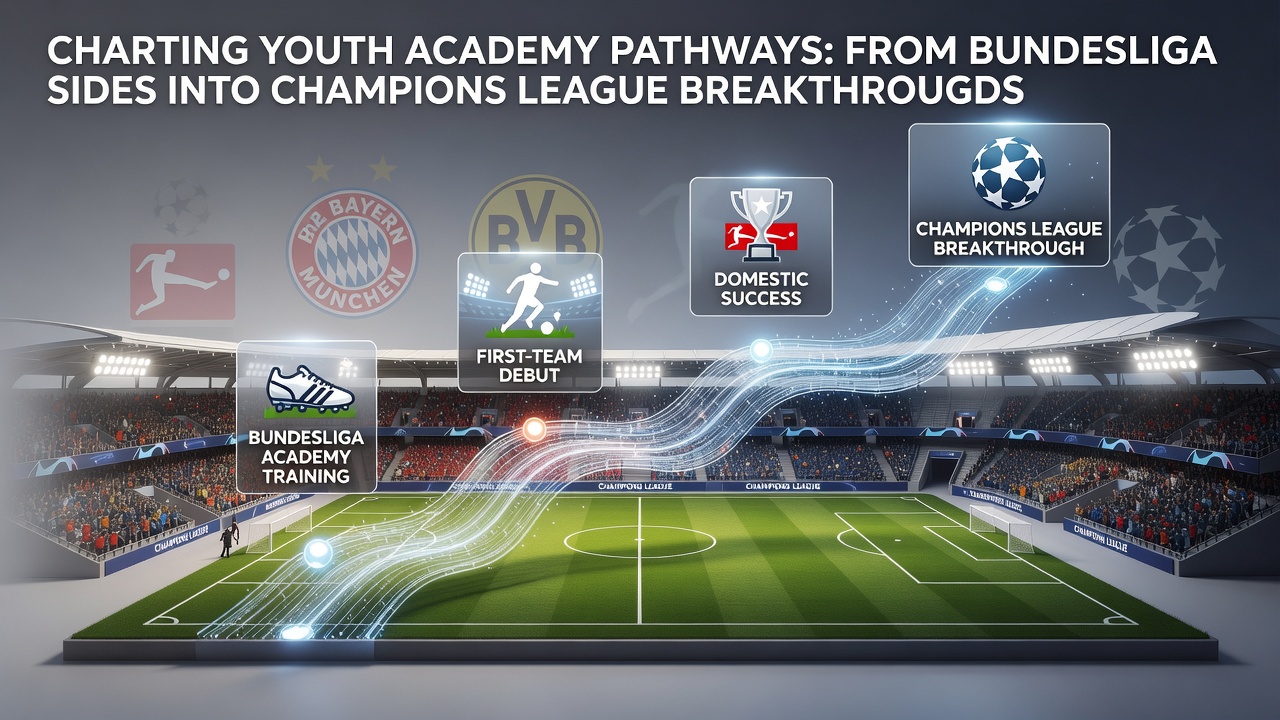
Bundesliga sides operate multi-tier academies that begin at under-9 level and advance through under-19 squads, with many players signing professional contracts around age 17 or 18 before moving into reserve or senior squads. Observers note that facilities in Munich, Dortmund, and Leverkusen emphasize technical drills alongside tactical sessions that mirror first-team patterns, and this continuity assists the transition when players step up. Data from the German Football Association shows consistent numbers of academy graduates entering Bundesliga matchday squads each season, with a portion advancing further into Champions League group stage or knockout fixtures.
Pathways often include loans to second-division clubs or partner teams for match experience, after which successful performers return and receive Champions League exposure during domestic title challenges or strong league finishes. Researchers tracking player careers have documented cases where individuals progressed from under-17 regional competitions directly into European match minutes within three years, highlighting the efficiency of the German licensing system that requires academies to maintain specific coaching ratios and infrastructure standards.
Documented Cases of Breakthrough Players
Jamal Musiala moved through Chelsea's youth setup before joining Bayern Munich's academy at age 16, then recorded Champions League appearances by 2021 while still a teenager, illustrating one route from Bundesliga youth ranks to continental minutes. Florian Wirtz followed a similar timeline at Bayer Leverkusen, progressing from under-19 Bundesliga matches to regular starts in the 2023-24 Champions League campaign after recovering from injury. These examples align with broader patterns identified in performance databases that link early academy registration to later European debuts.
Additional cases involve players such as Karim Adeyemi at Borussia Dortmund, who entered the first team after academy time at Red Bull Salzburg and immediately featured in Champions League qualifiers. Data compiled by European football monitoring organizations indicates that graduates from the top five Bundesliga academies account for a steady share of players logging minutes in the competition, particularly during seasons when German clubs reach the knockout stages. As the 2026-27 Champions League cycle begins in August 2026, several current under-21 prospects at these clubs hold contracts that position them for potential group stage involvement based on prior reserve-team output.
Statistical Indicators and External Factors
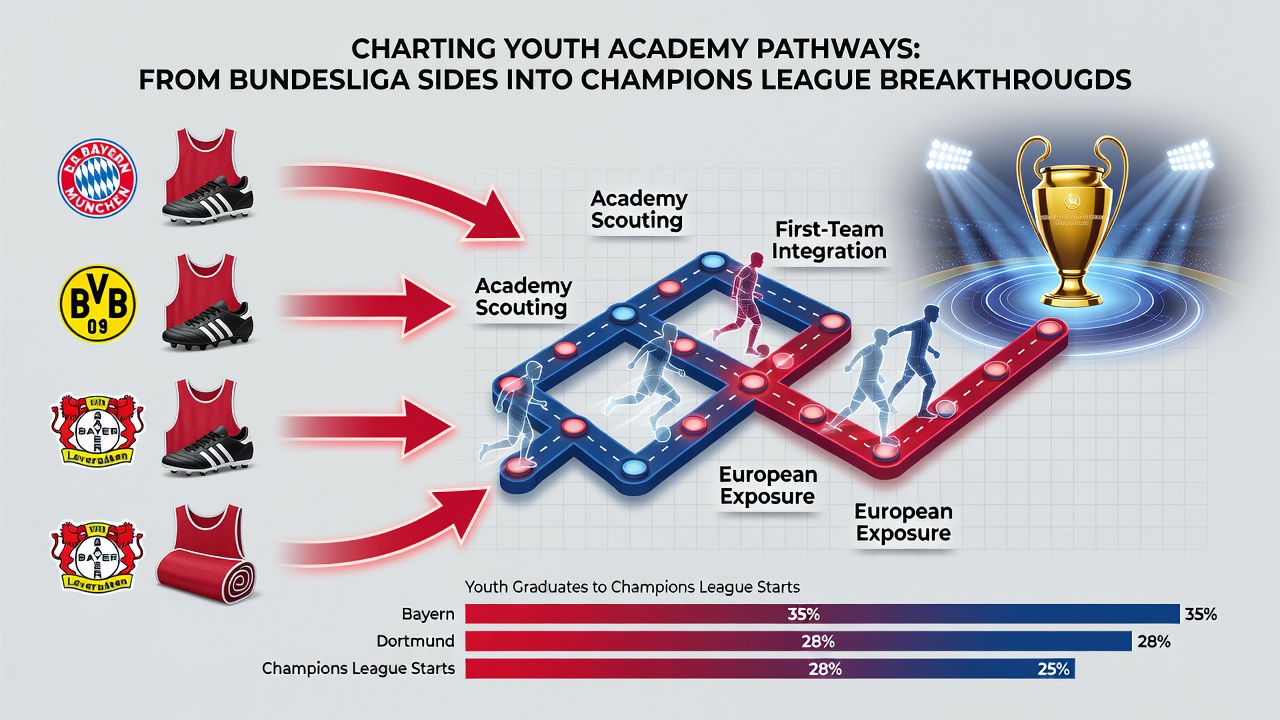
Figures released by the Bundesliga tracking service reveal that academy-trained players contribute approximately 15 to 20 percent of total minutes played by German clubs in recent Champions League seasons, with higher percentages during campaigns that extend into spring knockout rounds. These numbers reflect both domestic success and the league's qualification slots, which allow multiple teams annual entry. External influences such as transfer regulations under FIFA and UEFA youth protection rules further shape how clubs retain talent through the critical 16-to-21 age window.
Studies conducted by academic researchers at institutions including the University of Cologne have examined correlations between structured academy hours and later elite performance metrics, finding associations with improved passing accuracy and decision-making speed in high-pressure matches. Meanwhile, reports from the Australian Institute of Sport on talent development models note parallels in European systems that prioritize early specialization balanced with educational requirements, offering comparative context for German approaches.
Coaches at reserve teams often serve as the direct link, implementing sessions that replicate Champions League tactical demands such as high-line defending and quick transitions. Players who demonstrate consistency at this level receive call-ups, and performance data from those matches feeds into scouting reports used by senior staff. The process continues with integration into pre-season tours and training camps that include Champions League opponents, providing direct exposure before competitive fixtures.
Conclusion
Pathways from Bundesliga academies into Champions League appearances follow documented routes that combine licensed training environments, progressive match exposure, and performance data evaluation. As new seasons approach, including the one starting August 2026, tracking these progressions offers concrete information on how clubs convert youth investment into European competition involvement without reliance on subjective assessment.