Patterns in Midfield Control Across Bundesliga and Serie A Sides During UEFA Champions League Group Stages
Sam Richter · Aug 21, 2026
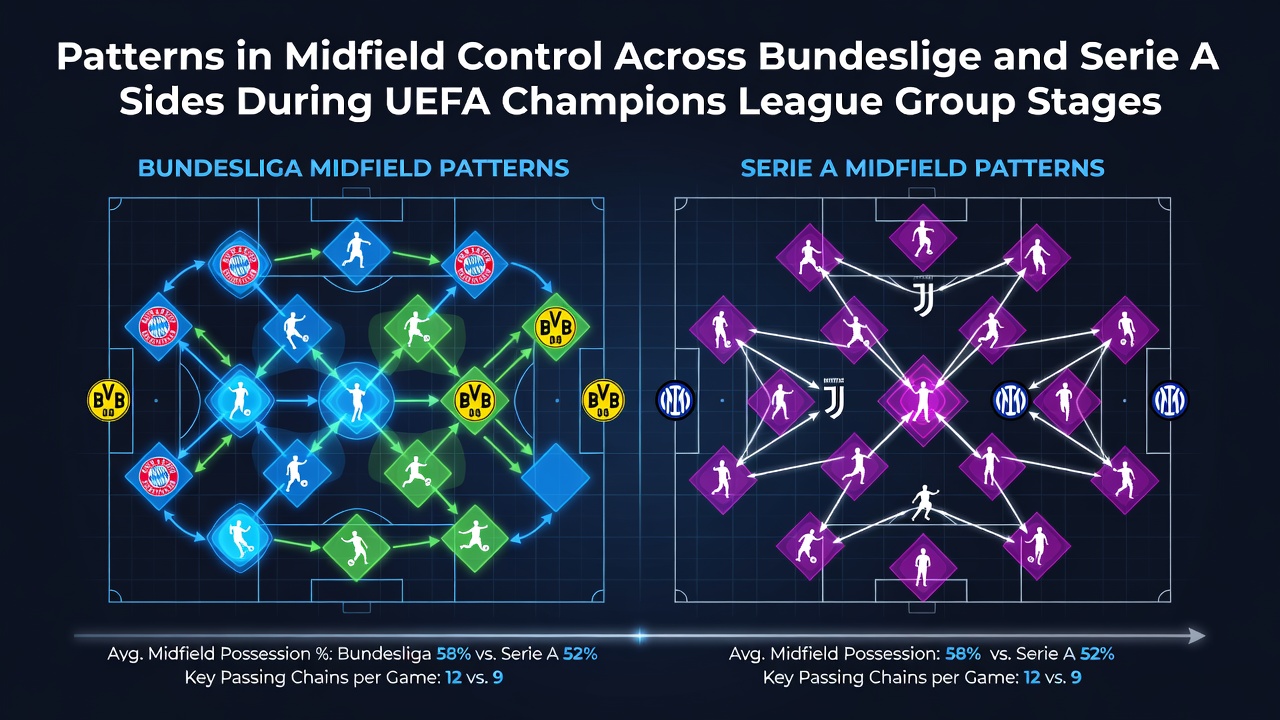
Patterns in Midfield Control Across Bundesliga and Serie A Sides During UEFA Champions League Group Stages
Analysts tracking European football have documented distinct patterns in how Bundesliga and Serie A teams manage midfield zones during UEFA Champions League group stage matches, and these patterns emerge through metrics such as progressive passes completed per 90 minutes, duel win rates in central areas, and territorial control measured by Opta-defined zones. Data compiled across multiple seasons shows Bundesliga sides often record higher volumes of forward passes from midfield, while Serie A clubs emphasize structured positioning that limits opponent transitions even when possession drops below 50 percent.
Teams from the Bundesliga like Bayern Munich and Borussia Dortmund have posted average midfield duel success rates above 58 percent in group stage fixtures since the 2022-23 campaign, whereas clubs from Serie A such as Inter Milan and Juventus frequently register lower pass volumes but higher accuracy in short combinations inside the opposition half. Researchers at sports analytics firms note that these differences align with domestic league tendencies, yet they become more pronounced when facing varied opposition styles in the Champions League.
Midfield Metrics in Context
Figures released by UEFA technical reports indicate that Bundesliga representatives completed an average of 142 progressive passes per match in the group stages of the 2023-24 and 2024-25 editions, while Serie A sides averaged 119 in comparable fixtures. This gap narrows in matches against teams that press aggressively, as Serie A midfielders increase their long-ball frequency by roughly 12 percent under sustained pressure. Observers point out that the same pattern appeared during the 2025 group stage when several Italian clubs faced high-pressing English opponents and adjusted their build-up tempo accordingly.
Ball recoveries in the middle third also diverge between the two leagues. Bundesliga teams recovered the ball in midfield zones 34 times per game on average during group stage play, compared with 29 recoveries for Serie A sides, according to data from the same UEFA reports. However, the quality of those recoveries differs because Serie A midfielders tend to retain possession longer after winning the ball, reducing immediate counter-attacks by opponents.
Case Examples from Recent Campaigns
One study of Bayer Leverkusen's 2024 group stage run revealed that their double-pivot midfielders completed 87 percent of passes under pressure, a figure that contributed to an 11-match unbeaten sequence in Europe. In contrast, AC Milan's midfield recorded an 82 percent completion rate in similar high-pressure situations yet maintained a lower turnover rate through more conservative positioning. Those who reviewed match footage from both campaigns note that Leverkusen pushed their full-backs higher to create overloads, while Milan relied on a single holding midfielder to screen the defense.
During the 2025 group stage, Napoli demonstrated a hybrid approach by blending Serie A defensive structure with increased verticality in transition, resulting in 27 midfield recoveries that directly led to shots. RB Leipzig, their Bundesliga counterpart in the same group, achieved 31 such recoveries but converted fewer into goal-scoring opportunities because their recovery locations were on average five meters closer to their own goal.
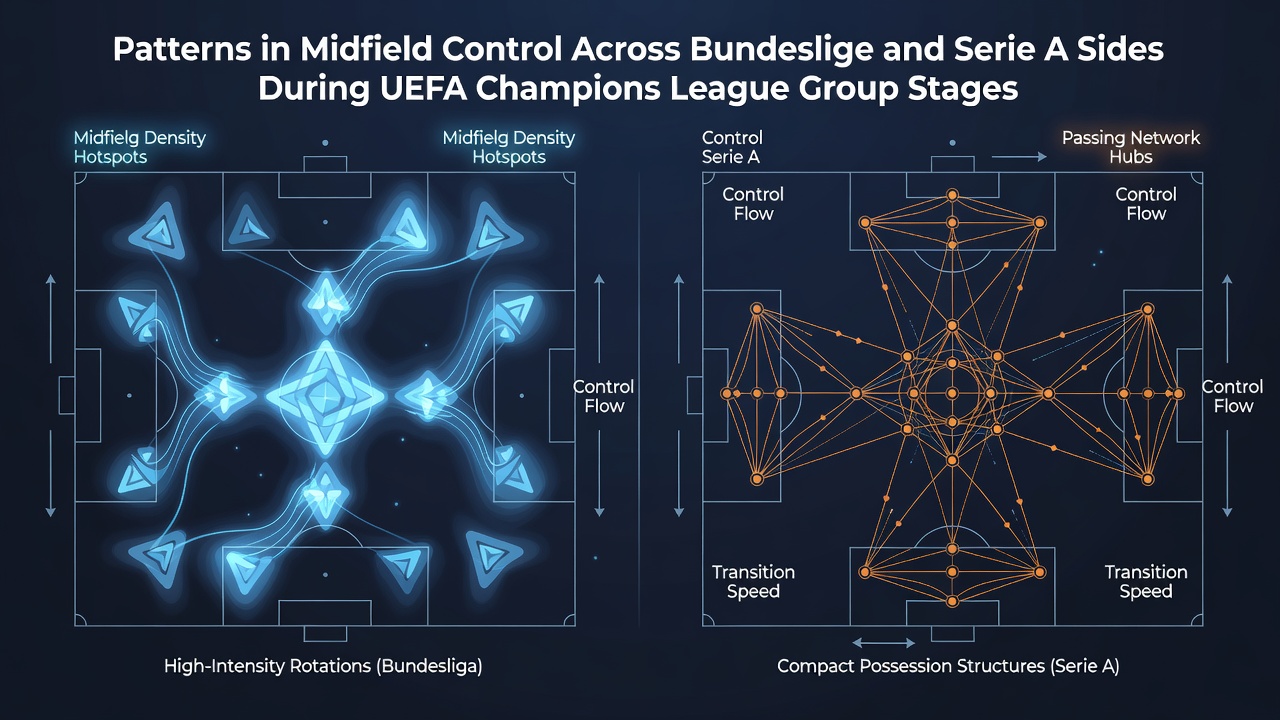
Seasonal Variations and August 2026 Outlook
Pre-season data collection beginning in August 2026 is expected to incorporate refined tracking of half-space control, an area where both leagues have shown measurable improvement. Clubs from both Bundesliga and Serie A have increased training focus on these zones following UEFA's 2025 rule clarifications on time-wasting, which indirectly affected midfield tempo. Early indicators suggest that teams preparing for the 2026-27 group stage will prioritize midfield compactness over pure possession numbers.
Academic papers published by researchers at the University of Bologna and the German Sport University Cologne have examined these tactical shifts, finding that Serie A sides reduce their average midfield line height by 2.3 meters when playing away in the Champions League, whereas Bundesliga teams maintain higher lines regardless of venue. The studies link these adjustments to differences in player recruitment profiles and coaching philosophies that persist across domestic and European fixtures.
Comparative Possession and Transition Data
Possession statistics from group stage matches between 2022 and 2025 reveal that Bundesliga teams average 54.2 percent possession against non-German opposition, while Serie A sides sit at 49.8 percent. Despite the lower share, Italian clubs limit opponent entries into the final third more effectively, conceding an average of 9.4 progressive passes per 90 minutes into the box compared with 11.7 for Bundesliga sides. Analysts attribute part of this defensive edge to the higher number of midfielders who stay within 30 meters of their own goal during out-of-possession phases.
Transition metrics further illustrate the contrast. Bundesliga midfielders initiate counter-attacks within five seconds of recovery 38 percent of the time, according to aggregated Opta data, while Serie A counterparts do so 29 percent of the time. The slower transitions from Italian sides correlate with fewer turnovers in dangerous areas, although they also reduce the frequency of high-quality scoring chances created from midfield regains.
Conclusion
Patterns of midfield control between Bundesliga and Serie A teams in the UEFA Champions League group stages continue to reflect broader league identities while adapting to the specific demands of European competition. Data from multiple seasons demonstrates consistent differences in pass volume, recovery location, and transition speed that shape how each set of clubs approaches matches. As preparations advance toward August 2026, these established tendencies provide a baseline for understanding future tactical developments in the competition.